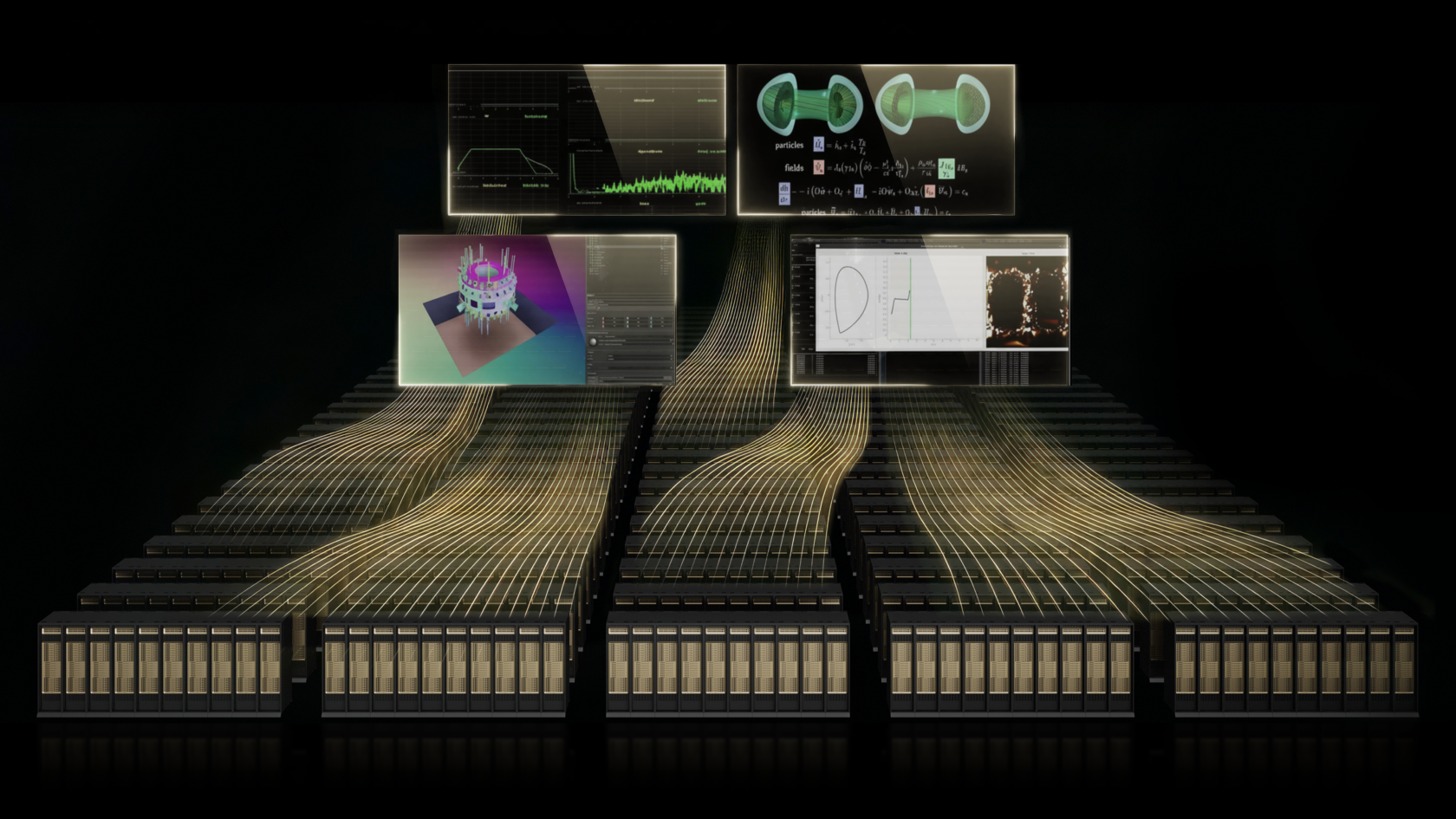
Look, everyone expected AI to get bigger, faster, and more ubiquitous. What they didn’t see coming — or at least, weren’t talking about in terms of industrial-scale metaphors — are AI factories. These aren’t your grandpa’s server farms. This is a new class of infrastructure, built specifically to churn out intelligence that’s always on, and more importantly, always real-time. In the industrial age, we had power plants converting raw energy into usable electricity. In this so-called AI age, these factories do the same, but they convert energy into tokens—the fundamental unit of production for everything from reasoning models to autonomous agents.
And the economics of this whole operation? Forget profit margins on widgets. Here, it’s all about tokens per second, tokens per watt, cost per token, and keeping the darn things utilized and humming 24/7. Performance per watt isn’t just a nice-to-have; it’s the direct translation into revenue. Cost per token dictates whether your grand AI ambitions are a profitable endeavor or a Silicon Valley-esque boondoggle.
AI is no longer just software. It’s essential infrastructure. That’s the headline, folks. That’s the paradigm shift.
The Assembly Line of Intelligence
These AI factories synchronize massive compute resources, all while trying to serve billions of requests without breaking a sweat. They’re orchestrated by software, sure, but the real magic — or madness — lies in their autonomous, multi-agent systems that run continuously. They produce intelligence around the clock. Think of agentic systems as the highly trained workers, reasoning and planning with the best AI models available, whether they’re proprietary or open-source. Need to customize? Fine. Want to optimize for your specific domain and deploy securely? All on these AI factories.
Operating in production today, AI factories are optimized across the entire stack — including models, compute, networking, memory, software, storage, power and cooling — to keep intelligence in continuous output.
This isn’t just about slapping more GPUs into a rack. This is a full-stack integration effort, designed for continuous output. They even generate synthetic training data for autonomous systems, creating scenarios that teach them to handle those pesky edge cases. Because if there’s one thing AI needs more of, it’s learning from more edge cases. Because… reasons.
AI factories are built for a new kind of workload: always-on inference that’s way beyond simply answering a prompt. Autonomous agents are out there reasoning, planning, searching, using tools, fetching data, writing code, and actually taking action. They’re even creating sub-agents that learn to use domain-specific tools and develop their own AI skills. These multi-agent systems are making AI workloads longer, deeper, and far more compute-intensive. And that, in turn, changes what the underlying infrastructure has to do. Performance now hinges on keeping the entire workflow moving with zero hiccups. Intelligence has to stay in production for the next step, the next action, the next decision. No pauses allowed.
The Bottleneck of Brilliance
Autonomous agents, bless their digital hearts, depend on accelerated compute, fast memory, storage for context (they do need to remember things, apparently), networking for coordination, software for orchestration, and CPUs for execution. The workload bounces around this entire stack, often with incredibly tight latency requirements at every single step. These AI factories are essentially full-stack systems engineered to keep those workflows flowing continuously, delivering the throughput, responsiveness, and utilization needed to churn out tokens efficiently, at scale.
Hardware, networking, memory, storage, and software are all architected together. They’re continuously optimized at every single layer. The goal? Increase utilization, lower that all-important cost per token, and boost output. They have to balance responsiveness for those always-on, interactive AI workloads with the throughput needed to maximize production. It’s a delicate dance, and one misstep means your AI factory becomes a very expensive paperweight.
As AI workflows get longer and more interactive, the factory has to run in real time. That means complex routing of requests, managing memory, coordinating services, balancing latency and throughput, and maintaining high utilization across the entire stack. The software layer is the unsung hero here. Its ability to efficiently run the factory determines how much intelligence it produces and, ultimately, how much value it creates. Inference has become a live orchestration challenge that spans the full machine. It’s no longer just about raw processing power; it’s about choreography.
But here’s the kicker: operating an AI factory efficiently doesn’t just start when the system goes live. The same full-stack codesign needed for inference also changes how these factories are planned, validated, and brought online. It’s a whole new ballgame.
In AI compute, performance per watt has become the ultimate measure of competitiveness for these AI factories. Data centers used to store files. Now, AI factories produce tokens. For the producers of AI, that output directly impacts revenue. For enterprises that want to scale AI, the cost per token determines whether they can do it profitably or if they’ll just be throwing money into a digital abyss.
And the proof is in the silicon. SemiAnalysis’s InferenceX benchmarks are quantifying this shift. The NVIDIA Blackwell Ultra GPU, for instance, is touted as delivering the lowest cost per token. This allows AI factories to produce more intelligence from the same power envelope, at a lower unit cost. More tokens per watt mean greater throughput per unit of infrastructure cost, space, or power. And a lower cost per token? That fundamentally improves the economics of inference at scale. It’s the difference between building a sustainable AI business and chasing unicorns.
NVIDIA GB300 NVL72 systems generate 50x more tokens per megawatt than the prior generation, resulting in 35x lower cost per token compared with the NVIDIA Hopper platform.
AI factories built with NVIDIA Blackwell Ultra are claiming up to 50x higher throughput per megawatt. That translates to a 35x lower cost per token. It’s about balancing performance, responsiveness, and energy efficiency at scale. The NVIDIA Dynamo framework is there to help orchestrate long-context reasoning and massive inference throughput, keeping utilization high as workloads get more interactive and complex. They’re showing how AI factory performance is now measured: by how efficiently a factory can keep that intelligence engine running.
This isn’t just an incremental upgrade; it’s a fundamental redefinition of what computing infrastructure is and what it does. The AI factory is the new engine of the digital age. And if you’re not thinking about tokens per watt, you’re already behind.