Here’s the thing about Silicon Valley and its cousins overseas: the press releases always sound incredible. They sprinkle in enough technical jargon to make your head spin, promising a future so bright you’ll need shades. And then you look at the financials, or the actual, you know, product, and it’s… less shiny. So when I saw the news about China’s National Supercomputing Center in Shenzhen and their shiny new Lingshen supercomputer, my first thought wasn’t awe, it was a very familiar, weary skepticism. Two ExaFLOPS. Purely CPU. And not a single foreign component. Right.
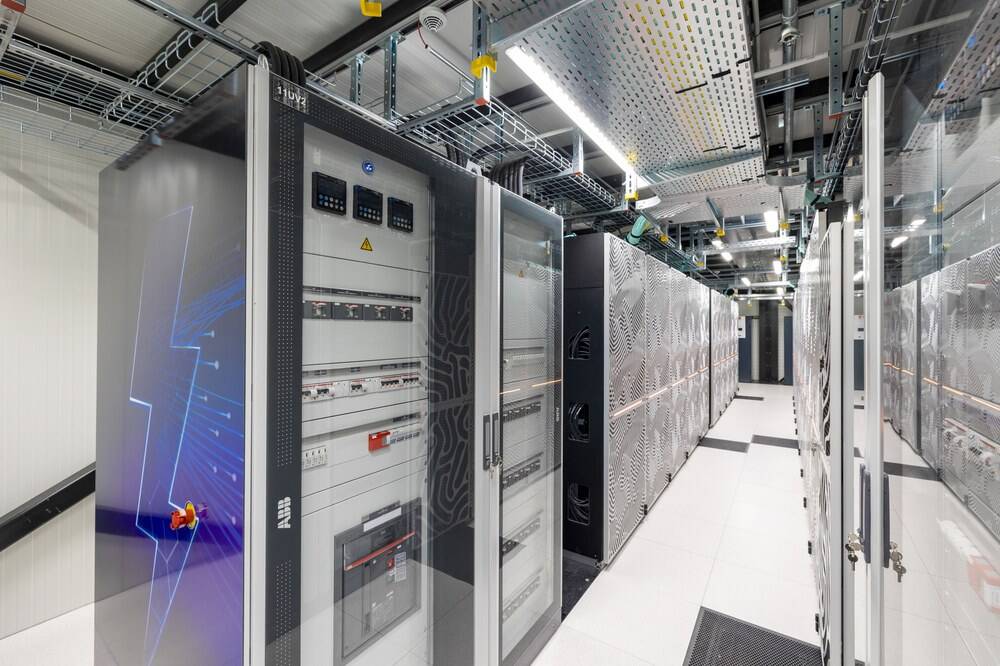
Look, building a supercomputer is no joke. It’s a delicate dance of processors, memory, networking, and cooling. For years, the big beasts have been relying on the grunt of GPUs for their raw number-crunching power, and suddenly, China’s waving a wand and saying, “CPU all the way, baby!” The announcement, dripping with nationalist pride about “homemade processors,” pitches Lingshen as a revolutionary departure. They’re talking 47,000 processors crammed into 92 cabinets, aiming for more than 2 ExaFLOPS. That’s a number that gets folks in the industry’s ears perked up, especially when you consider the current reigning champ, the US Department of Energy’s El Capitan, a beast that leans heavily on AMD’s APUs (which are basically CPUs and GPUs holding hands on the same package).
The CPU-Only Gambit: A Real Leap or a Leap of Faith?
This is where my veteran’s cynicism kicks in. Every other exascale contender out there is doubling down on accelerators. Why? Because for certain types of high-performance computing, especially those involving AI and complex simulations, GPUs offer a raw computational density that CPUs, for all their versatility, struggle to match. So, proposing a CPU-only architecture that claims to exceed current GPU-accelerated performance feels… ambitious, shall we say. It smacks of wanting to make a political statement as much as a technical one.
The project is apparently being split into phases. A pilot phase, which sounds sensible enough, will apparently use 100 Huawei Kunpeng servers (Arm-based, naturally). Then comes the big enchilada: the production system. And this is where the narrative starts to fray at the edges. They’re talking about x86 CPUs for the main system. Now, China has been pushing its domestic chip initiatives hard, and that’s a story we’ve been tracking for years. But competitive x86 processors are not exactly growing on trees there. We’re talking about companies like Zhaoxin and Hygon. Zhaoxin is a joint venture, sure, and Hygon used to license AMD’s Zen architecture. But after U.S. export restrictions, access to updated designs became a pipe dream. So, are these domestic x86 chips going to magically compete with the latest Intel or AMD silicon that underpins most of the world’s cutting-edge computing? History suggests… not so much.
The production system scales to 1,580 blade servers using x86 CPUs with 101,120 cores and a theoretical peak above 10 petaflops.
One hundred and twenty thousand cores? Sounds impressive on paper. And the networking and storage specs are equally voluminous – a million-port interconnect, 650 petabytes of storage. This thing is supposed to be a data monster. But the critical piece of information missing – the operational timeline for the completed system – is conspicuously absent. When you’re aiming for exascale, especially with such a novel architectural approach and a declared mission to shun foreign components, you need more than just grand pronouncements.
My biggest gripe here? The selective narrative. They trumpet the “no foreign components” line, then casually mention x86 CPUs, the very architecture that, in its competitive forms, is largely imported or dependent on foreign IP. It’s a convenient way to have your cake and eat it too, politically speaking. It allows them to claim self-sufficiency without necessarily delivering the actual cutting-edge performance that self-sufficiency, in a truly competitive sense, would require.
Who Actually Makes Money Here?
This is the eternal question, isn’t it? For Lingshen, the immediate beneficiaries are likely to be the domestic Chinese tech companies involved, particularly Huawei, if their Kunpeng servers prove capable in the pilot. The government, of course, stands to gain immense prestige if this project actually delivers. But for the rest of us, the end-users and the global tech ecosystem? It’s a gamble. If Lingshen works, it signals a significant shift in HPC architecture and a genuine stride towards technological independence for China. If it falters, it’s an expensive, albeit politically charged, experiment.
The claims about surpassing El Capitan, even in theoretical peak performance, feel more like aspirational marketing than concrete engineering. El Capitan is already there, running benchmarks. Lingshen is still largely a blueprint, a collection of promises. The Linpack score for El Capitan is a known quantity; Lingshen’s 2+ ExaFLOPS are… speculative, at best. We’ve seen this play before: big national projects with grand ambitions, often falling short of the most extravagant claims. The missing piece is always execution. And with a reliance on processors that haven’t yet proven their mettle on the global stage, that execution remains the biggest question mark.
So, while Lingshen is undoubtedly a fascinating project from an architectural and geopolitical perspective, I’ll reserve my full enthusiasm until I see actual, verifiable performance numbers from a fully operational system. Until then, it’s just another story about a country trying to build its own future, one processor at a time – and hoping the world is watching.
🧬 Related Insights
- Read more: NVIDIA’s Blackwell Dominates MLPerf—But at What Real Cost?
- Read more: Chey Tae-won Crashes NVIDIA’s GTC Party: SK Hynix’s HBM Hustle Gets Real
Frequently Asked Questions
What is the Lingshen supercomputer? Lingshen is a planned exascale supercomputer in China designed to achieve over 2 ExaFLOPS of sustained performance using only domestic CPUs and no foreign-made components.
Will Lingshen use GPUs? No, the Lingshen supercomputer is explicitly designed to be CPU-only, eschewing GPU accelerators which are common in other exascale systems.
When will Lingshen be operational? The original announcement did not provide a specific timeline for the completion and operation of the full production system.