Engineering’s AI Overhaul.
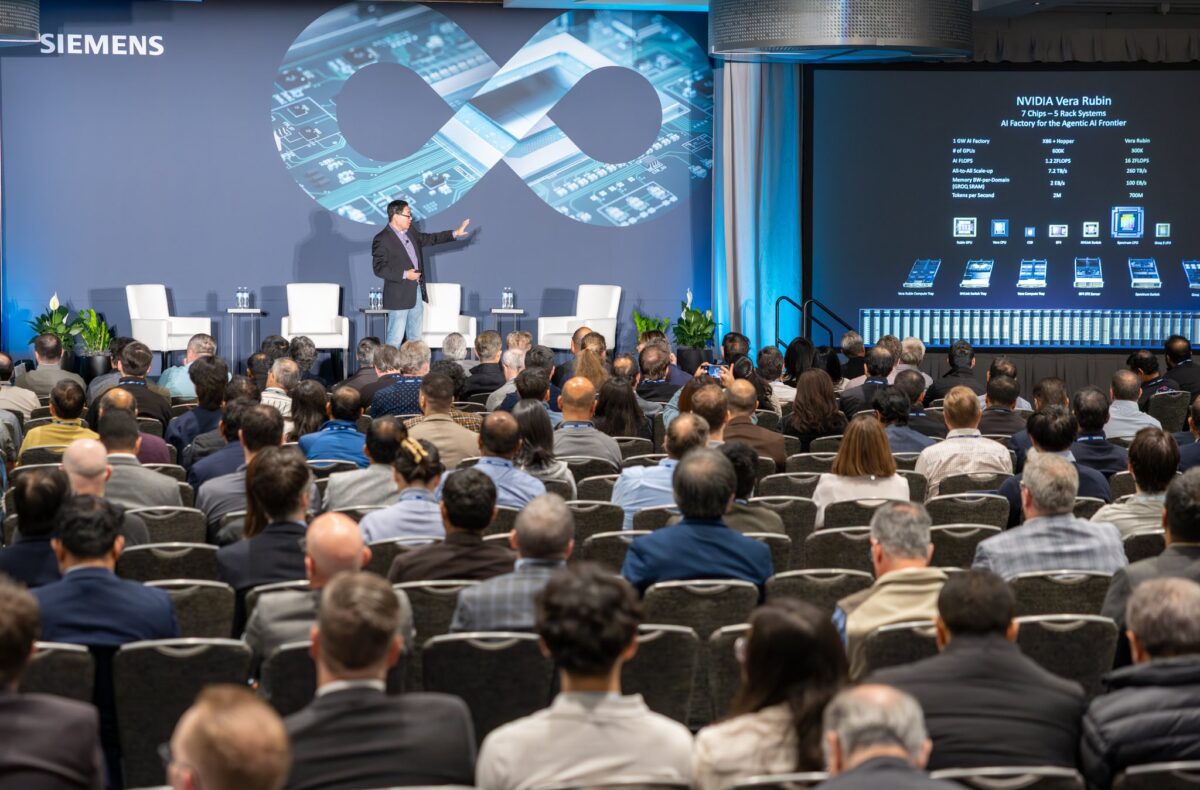
The semiconductor industry, the bedrock of our digital age, is undergoing a seismic shift. Forget incremental improvements; we’re talking about a fundamental redefinition of how chips are conceived, designed, and manufactured. This isn’t the hype cycle of yesteryear; this is a data-driven evolution, amplified by the insatiable demands of AI and the vast, sprawling architectures of cloud computing. The Siemens EDA User2User 2026 North America conference, recently concluded, served as a stark reminder that the engineering landscape is being redrawn, with AI not just as a tool, but as the very engine of innovation. Executives from giants like Siemens, NVIDIA, and Amazon Web Services painted a picture of a future where hyperscale infrastructure and AI-powered workflows are no longer novelties, but the operational norm.
The core realization echoing through the halls was this: semiconductor design is no longer a solitary pursuit of raw processing power. It’s an complex ballet of systems thinking, where hardware, software, physics, manufacturing prowess, and even the burgeoning field of autonomous machines must be considered in lockstep.
From Schematic to System: The Expanding Engineering Mandate
Jeff Applebaum, kicking off the proceedings, offered a poignant reflection on the sheer velocity of engineering evolution. He recalled an era where chip design was a more artisanal craft, heavily reliant on manual processes and tools that now seem quaintly rudimentary. Today’s engineers grapple with designs of exponentially greater complexity, all while being squeezed by market pressures demanding ever-shorter product cycles. It’s a high-wire act.
Jean-Marie St. Paul elaborated on this, underscoring a critical point: hardware innovation has, once again, ascended to its rightful throne at the industry’s core. As AI workloads balloon and advanced packaging technologies like 3D ICs become the standard, chip designers find themselves in a far more comprehensive arena. They must now meticulously account for thermal behavior, the subtle forces of mechanical stress, the complex dance of power delivery, and the complexities of system-level integration—all in addition to the traditional bastions of logic and verification.
Siemens, naturally, positioned itself as the linchpin in this transition, leveraging its expansive industrial portfolio that stretches from pure software to automation, manufacturing infrastructure, and sophisticated simulation technologies. Their long-term gambit is clear: to forge a unified digital thread, connecting the entirety of the product lifecycle, from the nascent stages of chip design right through to the final deployment in a factory. This integrated workflow is the promised land.
“The future of semiconductor development extends beyond schematic capture and simulation into areas such as digital twins, thermal modeling, industrial automation, and mechanical simulation.”
AI: The New Engineering Platform, Not Just a Tool
The specter of artificial intelligence loomed large, dominating discussions, none more so than in Da Yang’s keynote from NVIDIA. His message wasn’t about AI as a mere productivity enhancer; it was heralded as the fundamental infrastructure underpinning what he termed “the next industrial revolution.”
NVIDIA’s grand vision is built upon a layered AI ecosystem, intrinsically linked to accelerated computing. At the base lies a formidable infrastructure of GPU-powered supercomputers, engineered for the colossal task of training and executing AI models at scales previously unimaginable. Stacked atop this are ever-expanding libraries of CUDA, frameworks, and specialized AI applications, meticulously tailored for sectors as diverse as semiconductor design and manufacturing.
The tangible impacts on Electronic Design Automation (EDA) workflows are already profound. NVIDIA showcased significant speed-ups in critical tasks like SPICE simulation, optical proximity correction, and parasitic extraction. Workloads that once consumed agonizing hours, or even days, are now being dramatically compressed, thanks to the combined might of GPU acceleration and AI-driven optimization.
But the truly profound metamorphosis lies in how AI is beginning to interact with engineers. The industry is graduating from the relatively nascent field of generative AI to what NVIDIA is now labeling “agentic AI.” These advanced agentic systems possess the capacity for sophisticated reasoning, strategic planning, and the autonomous execution of complex engineering tasks.
Instead of passively responding to human-initiated prompts, these AI agents are poised to orchestrate entire workflows, critically analyze multifaceted results, intelligently optimize designs, and smoothly interface with a multitude of engineering tools—all with a significantly reduced need for direct human oversight. The stated objective isn’t to displace engineers, but rather to exponentially augment their productivity, freeing them to concentrate on higher-order problem-solving and strategic decision-making. This evolution is already beginning to reshape EDA workflows; AI copilots embedded within engineering tools are poised to automate the mundane, accelerate debugging cycles, and fundamentally improve decision-making across the entire design continuum.
From Digital Models to Physical AI: The Factory of the Future
NVIDIA’s expansive outlook also encompasses what it terms “physical AI.” This concept pushes the boundaries of artificial intelligence further, integrating it directly into the tangible world through the sophisticated deployment of robotics, the automation of industrial processes, and the creation of intelligent, interconnected infrastructure.
This ambitious approach leans heavily on the power of digital twins and meticulously crafted simulation environments. Engineers are empowered to train AI systems within these virtual arenas, which accurately mirror their physical counterparts, before deploying these refined models into actual factories, robots, or other industrial machinery.
The implications for semiconductor manufacturing alone are colossal. AI-driven systems have the potential to hyper-optimize production lines, detect defects with uncanny real-time accuracy, enhance process control to unprecedented levels, and automate vast swathes of fab operations. NVIDIA posits this as the dawn of a new industrial epoch, one where AI transcends its software confines and becomes an intrinsic, intelligent component of physical operations. This isn’t just about building smarter chips; it’s about building smarter factories, powered by smarter AI.
My unique insight here is to draw a parallel with the early days of SCADA (Supervisory Control and Data Acquisition) systems in industrial automation. Much like SCADA provided a centralized, data-driven nervous system for manufacturing plants decades ago, agentic AI and physical AI represent the next evolution of that industrial intelligence layer, but with an order of magnitude more sophistication and autonomy. While SCADA enabled monitoring and basic control, agentic and physical AI promise proactive optimization and autonomous decision-making, moving beyond mere oversight to active, intelligent management of the entire production ecosystem. This leap is comparable in its transformative potential.
Is This Just More Corporate Hype?
The language from companies like Siemens and NVIDIA can, at times, feel like a parade of buzzwords. Phrases like “next era,